
Outfit Ideas
How to Build a Capsule Wardrobe From Clothes You Already Own
A capsule wardrobe does not have to start with a shopping list. Build a smaller circulating set from the clothes you already wear, then fill only real gaps.
In this guide
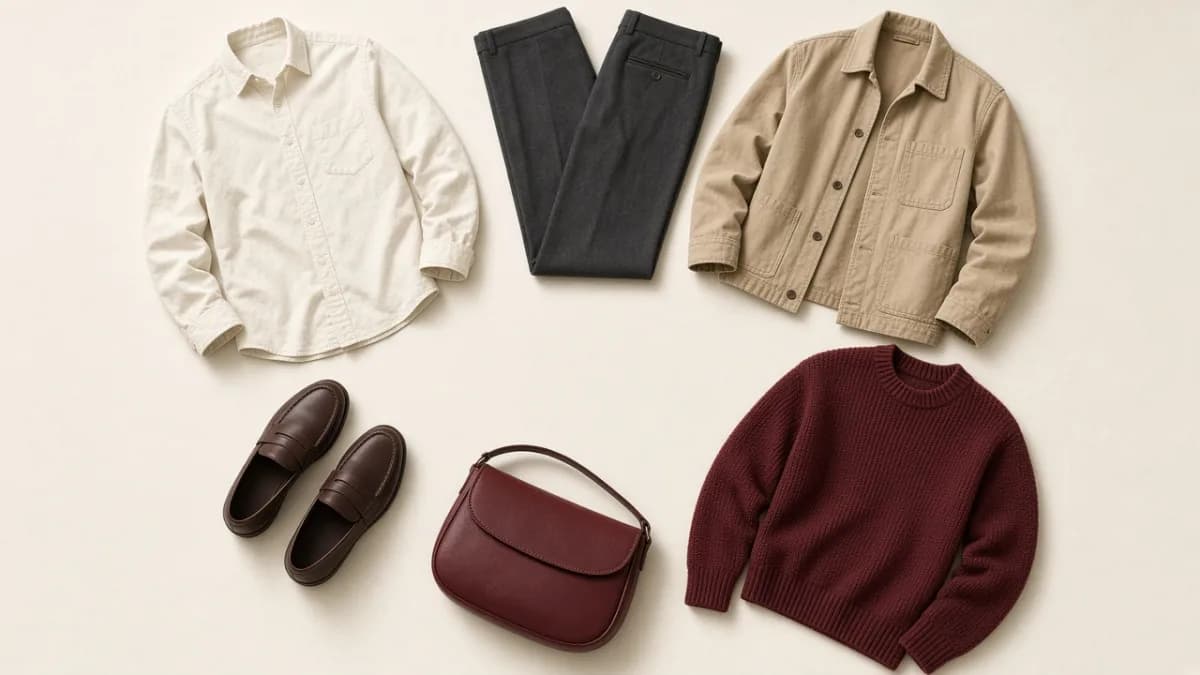
A capsule wardrobe is a smaller set of clothes that combine with each other on purpose. You do not have to buy a new “capsule kit” to have one. The more useful version is built from pieces you already wear.
The usual advice starts with a shopping list: neutrals, a blazer, a white shirt. That can wait. First map the clothes that already get you through a real week. Then decide whether anything is missing.
Start from what you actually wear
Look at the last two or three weeks, not the whole closet. Write down, or photograph, the pieces that left the hanger. Those are the capsule you already have, even if you never named it that.
Put those pieces together and ask a narrower question than “Do I like this?” Ask: does this combine with at least two other things I also wear? A navy trouser that only works with one specific top is less useful in a small set than a navy trouser that works with a tee, a shirt, and a knit.
Leave the rest of the closet where it is. You are not required to donate anything to run this experiment.
Choose a working size, not a magic number
Ignore fixed piece counts you see online. A week of office days, school runs, and one dinner needs a different mix than a week of remote work. Count outfits, not hangers.
A practical starting point:
- Enough tops and bottoms for the week without doing laundry every night, if that is how you live.
- One or two layers you actually put on.
- The shoes that match those days.
- One or two accessories that change a repeated base.
If that set covers most of the week, you have a capsule. If you still scramble for a single occasion — a client meeting, a wedding, a very hot outdoor day — add only for that gap.
Make the pieces talk to each other
Capsule clothing is less about owning less and more about choosing pieces that work together for the same days. A shared color palette helps, but matching colors do not guarantee compatible outfits. Hem lengths, volume, fabric weight, and shoes matter too.
For example, a burgundy midi skirt might work with a compact cream knit and loafers for the office, or a navy tee and trainers for a casual day. A long, heavy jumper in a matching color might still feel awkward over that skirt. Try a partial tuck, a shorter layer, or a different top before deciding that the skirt cannot belong.
Likewise, a crisp shirt and wool trousers may share a color palette with beach sandals but not the formality of your meeting. Include shoes in the compatibility test, not as an afterthought. A bright piece belongs if you have combinations you actually want to wear it in; it does not need to match every item.
Try this on a table or on a bed:
- Put your most-worn bottoms in a row.
- Place a top above each one only if you would wear that pair tomorrow.
- Add one layer that works with more than one of those pairs.
Gaps show up quickly. You may have four similar black tops and no comfortable shoe for the days you walk. That is more useful information than a 30-piece template written for someone else's climate.
Our anchor-piece outfit method is the day-to-day version of the same idea.
Run it for one week before you edit the closet
Wear only from the small set for five to seven days, with an allowed exception for sport, sleep, or a dress code you cannot fake. Notice three things:
- Which combination you reached for twice because it was easy.
- Which piece you avoided because it was fussy, warm, or formal.
- Which day still felt unsolved.
The avoided piece does not have to leave your home. It can simply leave the capsule. The unsolved day is the only honest shopping brief, and it might be solved by a shoe, a layer, or a different styling of something you already own.
Planning outfits for the week makes this test easier, because you decide once instead of improvising each morning.
Where a digital wardrobe helps
A digital wardrobe is useful here because you can see the small set without hiding the rest of the closet. Photograph the circulating pieces first. Save the combinations that survive the week in Looks, with names you will recognize: “office, walking shoes,” not “capsule 3.”
Fashion Frame can then suggest other combinations from those same pieces. Treat the suggestion as a candidate. If it uses something you already rejected for the week, that is information about your brief, not a failure of the closet.
What a capsule will not do
It will not make every garment flattering. It will not replace laundry, weather, or a dress code. It will not automatically reduce spending. Those are separate decisions.
It can reduce the number of decisions between the closet and the door. That is the actual job.
Build the capsule from the clothes that already get worn. Shop only for a gap you can name after a real week.
Frequently asked questions
Can I build a capsule without throwing clothes away?
Yes. Keep a smaller circulating set and leave the rest in the closet. The experiment is about what you dress from, not what you own.
How many pieces do I need?
Enough for your actual week, including laundry habits and climate. There is no universal number. If you can get through the week without a panic shop, the count is working.
What if my life has more than one dress code?
You may need two small sets, not one. A work capsule and a weekend capsule that share shoes or a layer is often more realistic than forcing every piece to do both jobs.
Put the guide into practice
Start with your own wardrobe.
Save combinations in Looks, then plan when to wear them in Calendar.
Try Fashion FrameContinue reading
Outfit Ideas
How to Create Outfits From Clothes You Already Own
When you have plenty of clothes but nothing feels right, start with one anchor piece. This method turns individual garments into repeatable outfits.
Wardrobe
How to Organize a Digital Wardrobe You Will Actually Use
Keep your digital wardrobe useful after the first upload: correct categories, handle duplicate records carefully, and update saved outfits when clothes change.
Outfit Ideas
How to Plan Outfits for the Week
Weekly outfit planning is choosing combinations before the morning you need them. Start with the calendar, reuse a base, and save looks you will actually open.