
Outfit Ideas
How to Plan Outfits for the Week
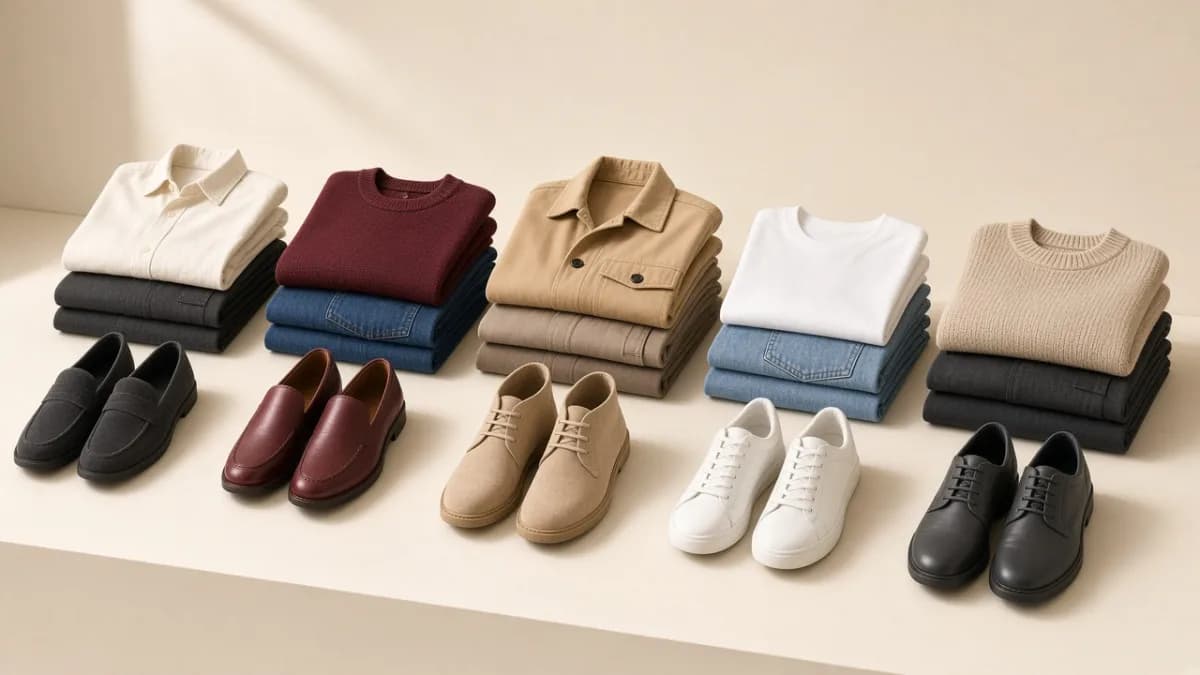
Weekly outfit planning is choosing combinations before the morning you need them. Start with the calendar, reuse a base, and save looks you will actually open.
In this guide
Planning outfits for the week means choosing combinations before the morning they are needed. The point is not a perfect seven-look editorial. It is fewer decisions when you are short on time.
You can do this with clothes on a chair, notes in a phone, or an outfit planner. The method is the same: look at the week, pick a wearable outfit for each demanding day, then leave yourself a little flexibility.
Look at the week before you look at the closet
Open the calendar, not the wardrobe. Mark the days that actually have constraints: commuting, a meeting, a dinner, travel, sport, a day you will be outside for a long time. Ordinary work-from-home days can share a looser uniform.
Write one line per demanding day. “Tuesday: office, walking, indoor air-conditioning.” “Thursday: dinner after work, still need a bag that fits a laptop.” Those lines are the plan. Clothes come second.
Weather matters when it changes what you can physically wear. If the forecast is unreliable, plan a removable layer instead of a different outfit.
Choose outfits in this order
- Anchor the hard days first. Client meetings, events, and days with a lot of walking get first pick of the comfortable shoes and the pieces that already work.
- Reuse a base. Two days can share the same trousers or the same shoes if you change the top or the layer. That is planning, not failure.
- Check laundry and availability. An outfit is not a plan if the shirt is in the wash or the shoes are still wet.
- Leave one flexible day. If Wednesday has no constraints, do not over-specify it. Keep a known casual formula ready.
This is the weekly version of creating outfits from clothes you already own. Use the same anchor method across several days, checking when a repeated piece needs washing, drying, or repair between wears.
| Day type | What to decide in advance | What can wait |
|---|---|---|
| Commute plus office | Shoes and a layer you can remove | Jewelry |
| Dinner after work | Whether the office base can stay, and which shoes change | A new outfit from scratch |
| Errands / home | A known casual formula | Anything elaborate |
| Unclear weather | A layer, not a second complete look | Exact outerwear until the morning |
Build from a smaller set
Weekly planning is easier when the circulating clothes already combine. Different dress codes can need different outfits, but ordinary days can share a base. A capsule built from clothes you already own is one way to make the week share parts.
You do not need a 30-piece project. Photograph or pull the clothes for this week. If the same navy trousers appear three times with different tops, that is a successful plan.
A five-day plan with repeat pieces
Here is one example for a mild week with two office days. It is not a shopping list; substitute comparable clothes and the dress code you actually have.
| Day and brief | Planned combination | Availability check |
|---|---|---|
| Monday: office and walking commute | Charcoal trousers, cream shirt, camel blazer, comfortable loafers | Check that the loafers are comfortable for the full route |
| Tuesday: home and errands | Jeans, navy tee, trainers | Leave Monday's shirt out to wash |
| Wednesday: office | Monday's trousers and loafers, burgundy knit | Repeat trousers only if they are clean and comfortable; otherwise use a second pair |
| Thursday: dinner after a casual work day | Burgundy midi skirt, navy knit, loafers | Try the knit's hem with the skirt beforehand; tuck or shorten the line if you prefer |
| Friday: flexible | Jeans, a clean tee, trainers; add the blazer if needed | Use a fresh top, not Tuesday's by default |
Shoes and a blazer can appear more than once. A top worn next to the skin may need washing between wears. Plan around the garment's care instructions, your activity, and its actual condition, rather than treating every repeated piece as equally available.
Save the plan where you will see it
A pile on a chair works until someone moves the chair. A note in your phone works until you forget which navy shirt you meant. Saving the combination as a look, then placing it on a day, is the version that survives a busy Monday.
In Fashion Frame, save combinations in Looks and use Calendar when you want to attach them to dates. Name the look after the constraint (“office, walking shoes”) so you can recognize it at a glance. If you want a second opinion on a thin day, ask the Home AI stylist using that day's one-line brief and the pieces still free.
A digital wardrobe helps you recognize the exact pieces in each saved combination. Check the physical clothes too: a calendar entry does not know that your shirt is still drying.
Adjust without starting over
Plans break. A meeting moves, it rains, a top does not feel right. Change one piece, not the whole week.
If Tuesday's layer is wrong, keep Tuesday's trousers and shoes. If you wear Thursday's outfit on Wednesday, move Thursday to a known backup instead of improvising four new looks. The backup can be the same casual formula you already trust.
The full closet, nothing to wear spiral often starts when a plan breaks and you return to an open rail with no brief. Keep the brief. Swap one item.
What weekly planning is not
It is not a requirement to wear seven unique outfits. It is not a promise that you will feel like dressing up every day. It will not do your laundry.
It is a way to spend ten or twenty minutes once so the rest of the week has fewer open questions.
Frequently asked questions
How far ahead should I plan?
Plan the days that have constraints. For many people that is the coming work week, decided on Sunday evening or Monday morning. Planning a whole month is usually more work than it saves.
What if my week changes every day?
Plan only the next demanding day, and keep one backup outfit ready. A rigid seven-day grid is for a relatively stable calendar, not for shift work or travel that keeps moving.
Do I need an outfit planner app?
No. You need a brief for each demanding day and a place you will actually look. An app helps when you want saved combinations, a wardrobe you can see, and a calendar that does not live on a chair.
Put the guide into practice
Start with your own wardrobe.
Save combinations in Looks, then plan when to wear them in Calendar.
Try Fashion FrameContinue reading
Outfit Ideas
How to Create Outfits From Clothes You Already Own
When you have plenty of clothes but nothing feels right, start with one anchor piece. This method turns individual garments into repeatable outfits.
Outfit Ideas
How to Build a Capsule Wardrobe From Clothes You Already Own
A capsule wardrobe does not have to start with a shopping list. Build a smaller circulating set from the clothes you already wear, then fill only real gaps.
Outfit Ideas
Closet Full of Clothes, Nothing to Wear? Try This
A full closet can still feel empty. Name the day's constraints, change one piece in an outfit you trust, and stop shopping from the stuck feeling.